
AI Staging vs. Professional Staging
What NYC Agents Need to Know Before Subscribing to AI
AI staging apps are the new rage for real estate agents. Imagine uploading a photo of an empty listing, and in minutes get a realistic-looking staged photo of the room. Sounds too good to be true? It may be. While AI staging apps are faster and cheaper than professional virtual staging, the apps don’t advertise their limitations and downfalls. The gap between what they promise and what they deliver can quietly cost you buyer trust, wasted showings, and your professional reputation as a NYC real estate agent.
Virtual staging in listing photos has surged as agents look for ways to make listings stand out and sell faster. The options to DIY this step are more accessible, but before you hand your next listing over to an AI app, there are three specific limitations NYC agents need to understand.
Greenhouse NYC’s founder and principal photographer, Melanie Greene, tested current-generation AI staging apps being marketed to real estate professionals. In this blog, we’re sharing what we learned about the limitations, comparing it to real stagers, and highlighting how AI photos can affect your listing quality.
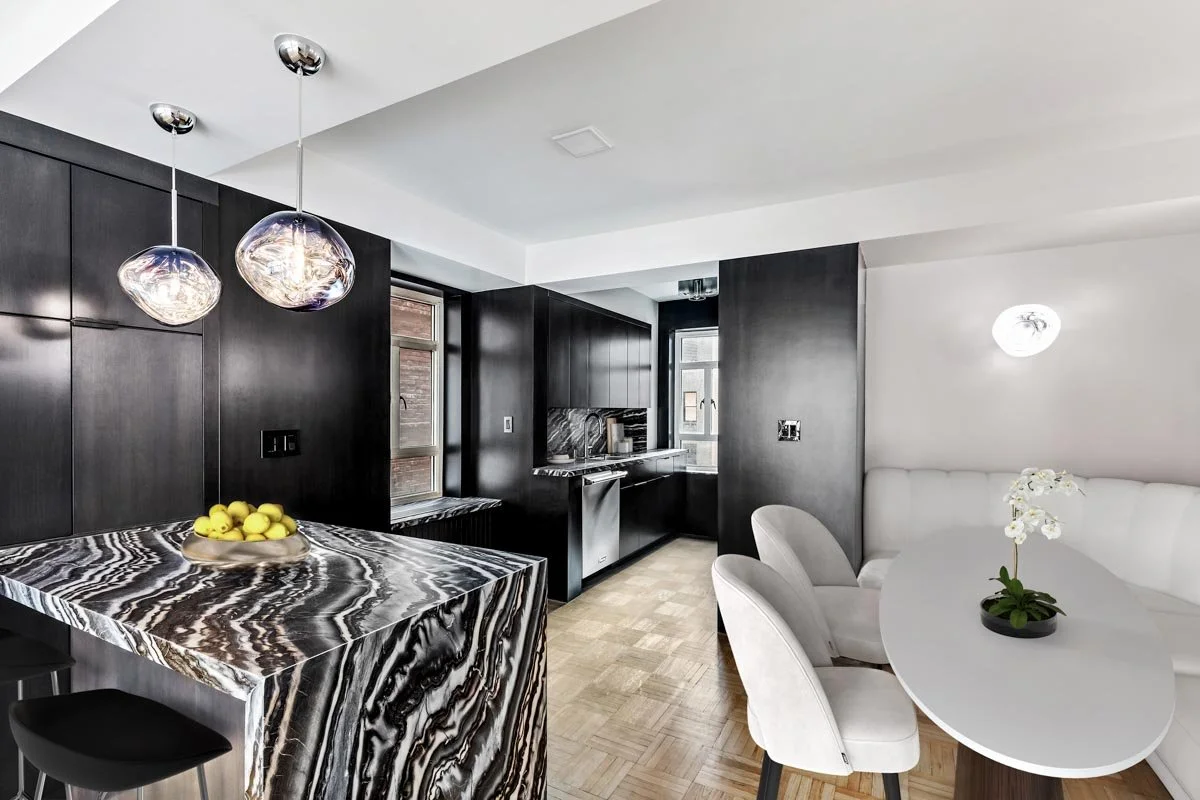
What's the Difference Between AI Staging and Professional Virtual Staging?
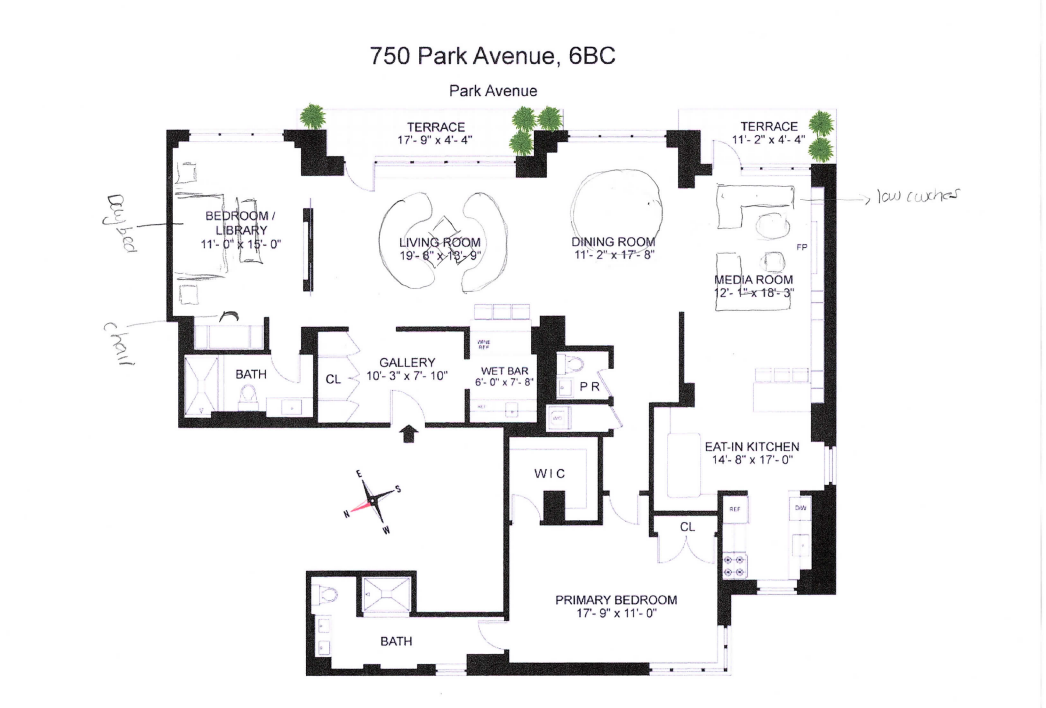
The rise of AI makes virtual staging feel new, but virtual staging photography has been around since the late 2000s/ early 2010s. The process starts with vacant home photography. A trained designer takes the blank slate, compares it to the floor plan dimensions, and places virtually-designed decor in the photo. The designer can tweak the scale and look of the decor to match across multiple different photo angles of the same room.
AI staging apps add decor to an image through a process called inpainting. You define the area where you want furniture or decor added. AI uses your selection to determine the scale and shape of the object. Then, it uses a process called diffusion to organize pixels into a recognizable shape based on your text description and the patterns it recognized in the images it was trained on. Once an object has been added to an image, it can only be removed or layered with more objects. There is no tweaking available or consistency across multiple images.
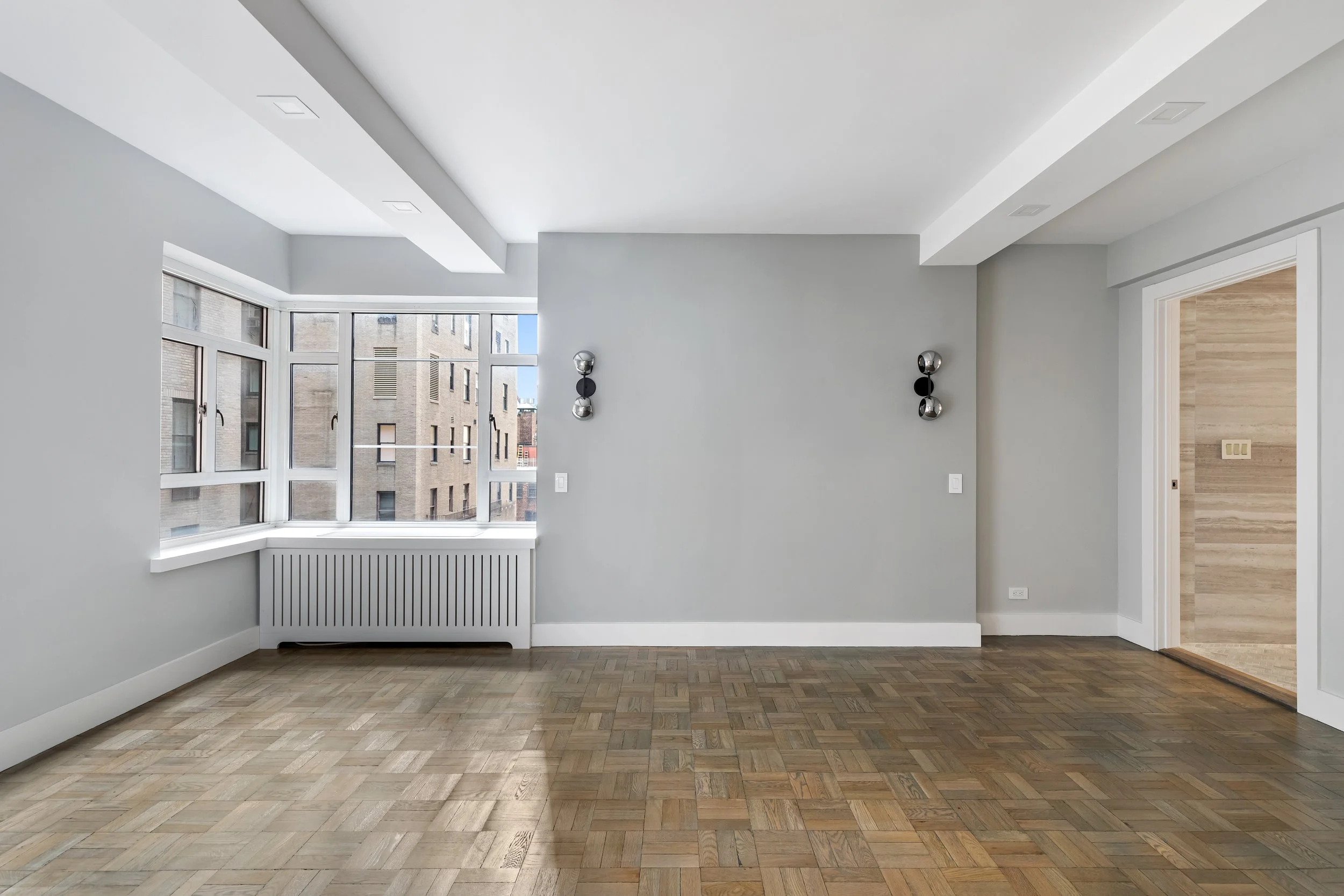

How NYC Apartments Expose AI's Biggest Flaw - Dimension
When you use AI staging tools, you simply input an image of an empty room, and the result looks beautiful at first glance. However, the closer and longer you look at the image, you’ll find many issues.
Images of an empty room don’t provide accurate scale to AI staging programs. Since it doesn't know the actual square footage of the room, it cannot generate accurately scaled decor and furniture. For example, AI might place a sectional sofa that would block an entryway. It may generate a dining table sized for eight in a room that can only fit four.
The biggest risk real estate agents face with using AI staging is that buyers who tour the property will be confused when the property is actually much smaller than what the listing photos presented. This dimension issue is a documented limitation of current AI staging technology. Until programs begin working with measurement data rather than just visual references, any NYC listing is a liability when staged by AI.
Can AI-Staged Images Be Used for Show Sheets and Print Marketing?
Most AI staging apps export images at web-optimized file sizes. Those files are compressed for fast loading online and are not engineered for print. When you drop them into a show sheet and send it to print, the staged images come out pixelated or slightly blurry. Buyers will quickly notice the AI staged images among the professional vacant home photos.
In New York City, printed show sheets remain standard marketing collateral for listings at mid-market and above. A blurry staged image on a high-end show sheet communicates inconsistency and unreliability
Professional virtual staging delivers print-ready files at full resolution. The staged images hold up in print, on large-format displays, on MLS, and in email marketing. You can trust that the quality will match your high-end photos and expectations of clientele.
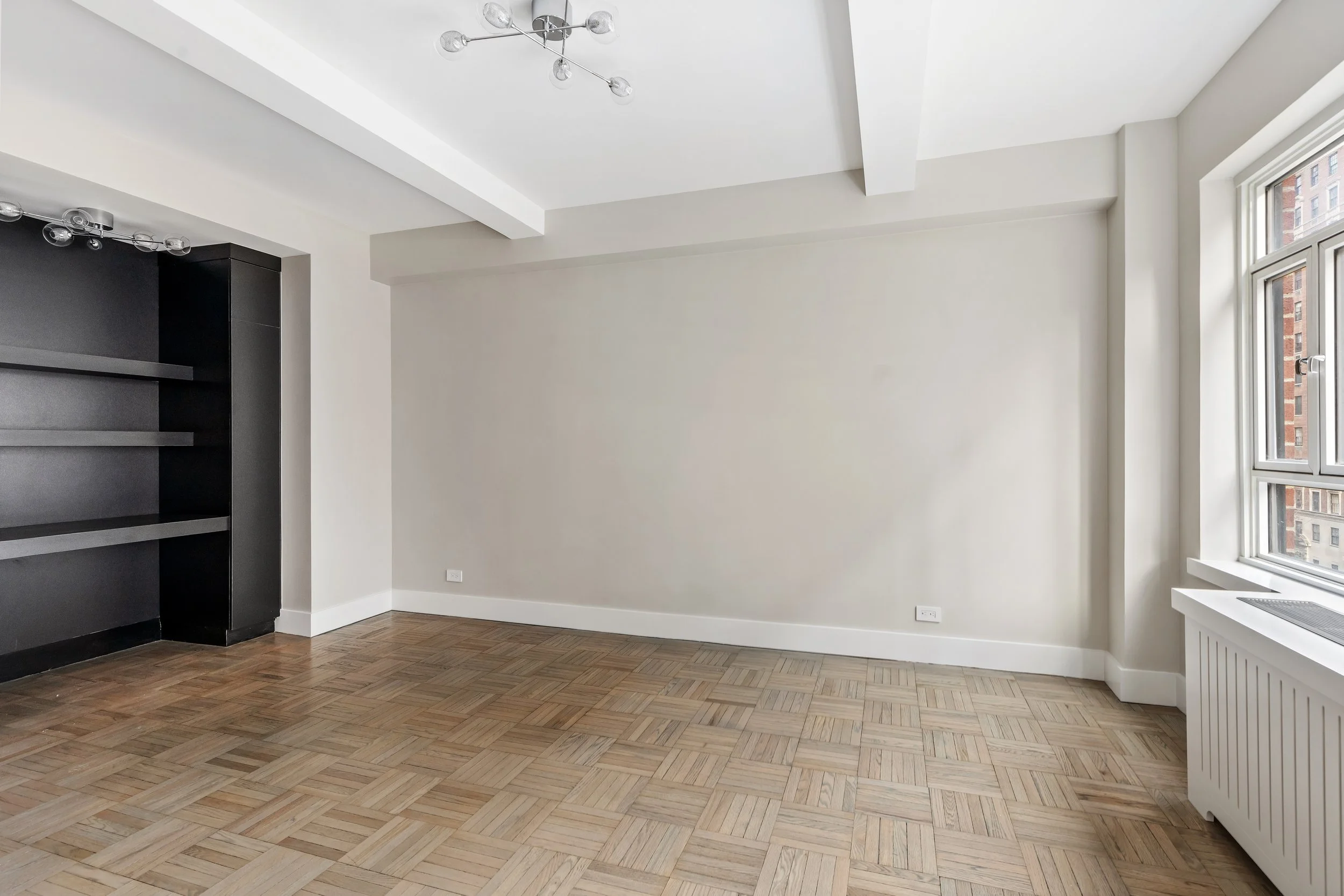

When One Room Has Multiple Angles, AI Can't Keep Up
Most NYC listings aren't photographed from a single angle per room. A well-executed photoshoot of even a studio apartment will have multiple angles showing every inch of space available.
AI stages each image independently with no awareness that it’s the same space. The results give you a living room with multiple different configurations and furniture styles. For example:
You upload 3 images of an empty living room at different angles and ask the AI tool to furnish the room in a Scandinavian style.
The AI provides different configurations for each image. Every angle of the room has different furniture, plants, rugs, etc. None of the images look like the same room.
A professional virtual stager uses the floor plan as the constant. Every angle of the same room shows the same furniture in the same positions, because the stager knows where every piece fits in the actual space. The result is a cohesive listing gallery that looks like the real space was staged physically.
What the Speed Trade-Off Actually Costs You
While AI staging apps are faster and cheaper, the quality may cost you more in return.
Inconsistency with images within a listing are immediately noticeable. It shows up in buyer feedback after a showing, in a deal that stalls because the in-person experience didn't match the online presentation, or in a client relationship that fizzles out after they realize the photos overpromised what was really there. This is the predictable outcome when staging is used to distort or misrepresent a space.
Melanie Greene, founder and lead photographer at GreeneHouse NYC tested one of the leading AI staging programs available. She reported,
“Every square inch matters in New York and the computer did not understand that. It extended the room and it had bikes lining the wall- and I was like no. Some of that is in how you communicate with AI and the prompts that you write, but it didn't seem to matter what I was writing. It doesn't replace the human.”
If your listing will have printed collateral, requires staging across multiple room angles, or sits in the mid-to-luxury price range, then professional virtual staging with AI is not an option. To meet the minimum standard for accuracy in NYC real estate marketing you need a professional virtual stager.
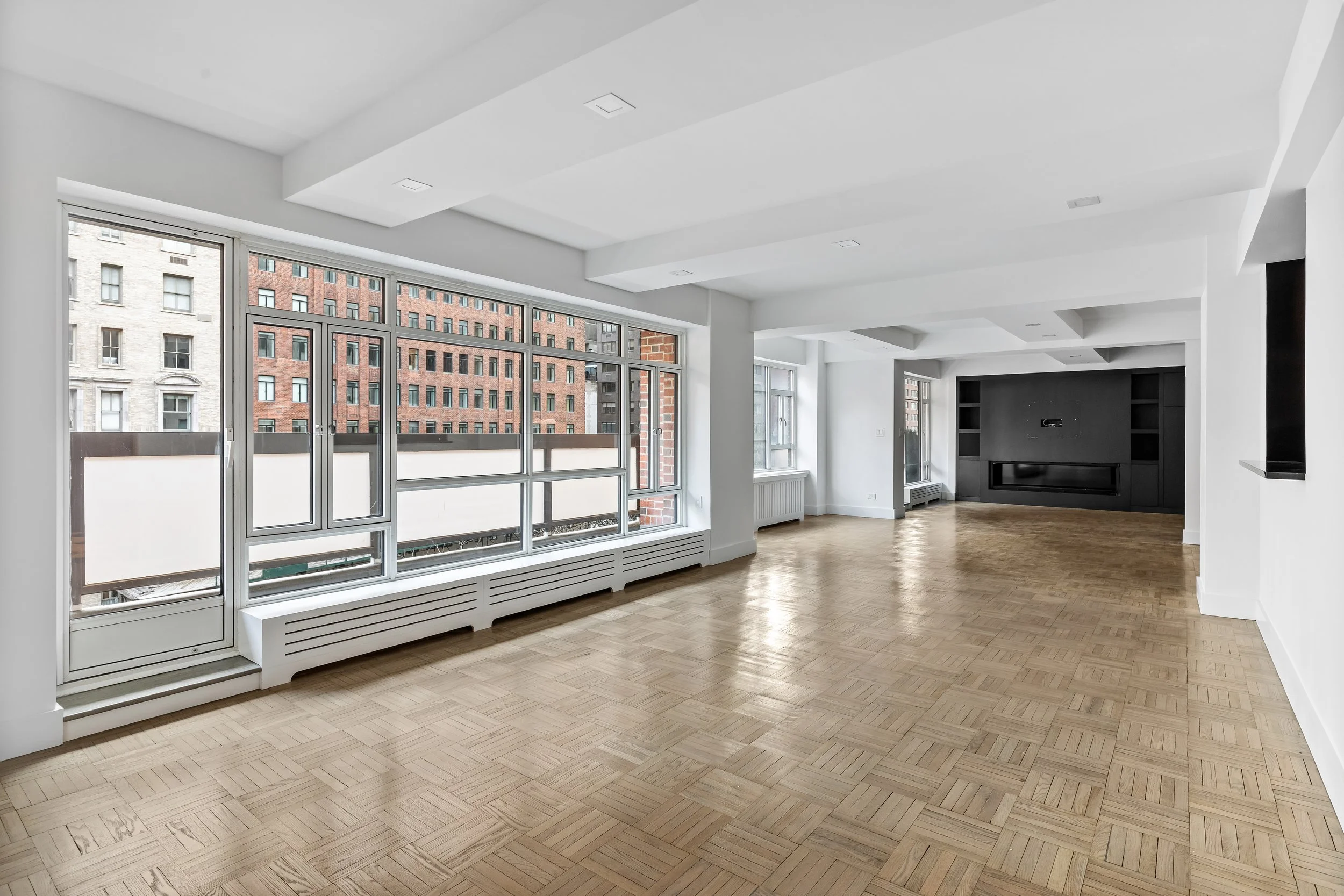
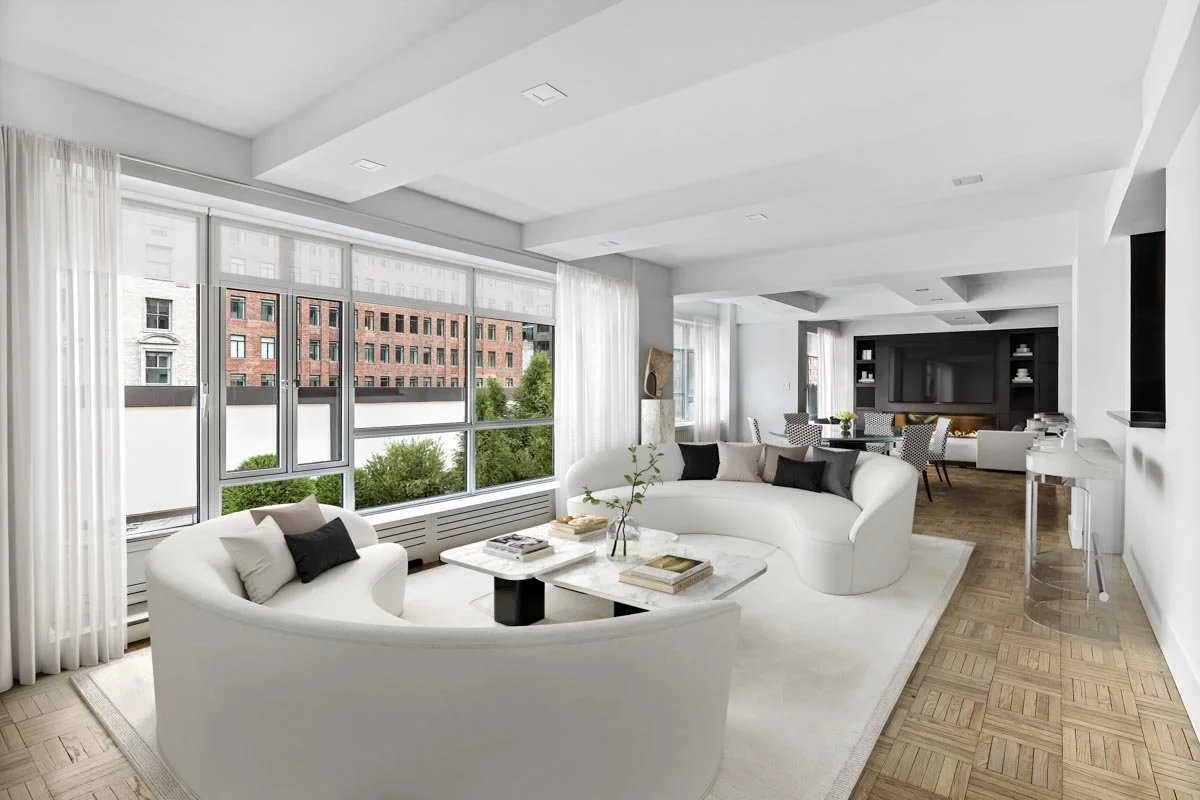
Comparing Real Virtual Stagers and AI Virtual Staging Tools
GreeneHouse NYC has been photographing New York City real estate for over 20 years. In that time, the tools have changed, but the requirements for accurate images haven't.
Our virtual staging is handled by professional designers who work directly from floor plans. They stage for the actual dimensions of the space, maintain consistency across every angle of every room, and deliver files that are print-ready from day one. We don't outsource quality control to an algorithm.
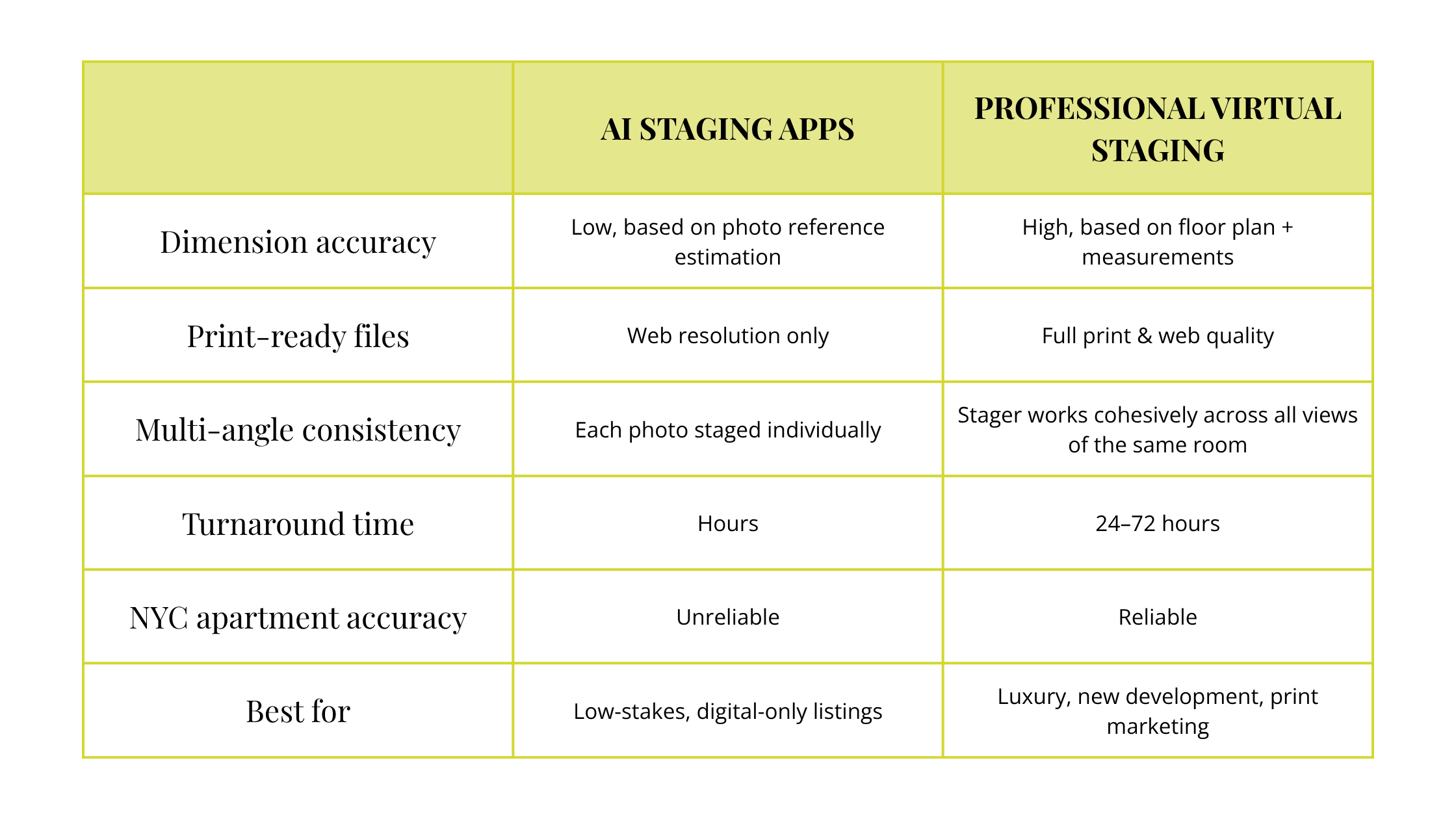
We've tested AI staging tools firsthand. Our experience mirrors what we hear from agents in the field: the tools are improving, but they are not a substitute for professional-grade staging on a high-end listing. Below is a comparison of the quality between AI Staging Apps and Real Virtual Stagers.
If you want to explore how virtual staging can improve your listings, take a look at our before and after gallery, or start the conversation with our professional staging team.

Frequently Asked Questions About AI Virtual Staging
Is AI virtual staging accurate enough for NYC real estate listings?
For most NYC listings, AI staging carries real accuracy risks. These programs use visual queues rather than measurable dimensions, so AI tools often furnish spaces with configurations and furniture that couldn't physically fit. This can mislead buyers and create problems at a showing where every inch in New York City matters.
Can AI-staged photos be used on printed show sheets?
Most AI staging apps export at web-optimized file sizes that are too small for print. AI-staged images often look slightly blurred or pixelated. For mid-to-luxury listings in NYC this is a quality issue that should be avoided. Clients expect clear, consistent photos of the property that only professional virtual staging by real people can deliver.
When does AI virtual staging make sense for real estate?
AI staging can work well for lower-priced listings where speed is the priority and all marketing is digital. It's a poor fit for luxury properties, new developments, multi-angle shoots, or any listing requiring printed collateral. When buyer expectations need to match the in-person experience, professional staging is the more reliable choice.
Can virtual staging be added to photos I already have?
It depends on the quality of the base images. Virtual staging works from the photography, so poorly lit or low-resolution photos will limit the quality of the output. For best results, photography and staging should be planned together. To learn more about adding virtual staging to your listings read our blog post: Vacant Home Photography vs Virtual Staging: Do You Need Both?
How does professional virtual staging handle multi-room or multi-angle shoots?
Professional virtual stagers work from a floor plan and maintain consistent furniture placement across every angle of a room. AI tools stage each photo independently and cannot repeat the design on multiple views of the same space. This results in inconsistent staging across a listing gallery. A professional stager designs a consistent gallery where every angle of every room looks like a cohesive space.
How much does professional virtual staging cost compared to AI apps?
AI staging apps are generally cheaper and faster per image. Professional virtual staging costs more but delivers print-ready files, dimensional accuracy, and consistent results across every angle of a shoot. For mid-to-luxury real estate agents, the investment reflects the standards your clients and their buyers expect, and protects your professional credibility in the process.
Ready to Stage Your Listing the Right Way?
GreeneHouse NYC provides professional virtual staging for NYC real estate agents, brokers, and developers with print-ready files, floor plan accuracy, and consistent results across every angle of the space.