
How to Photograph NYC Loft Interiors: Featuring 114 W 17th St Listing
Photographing loft apartments is one of the more challenging areas of NYC real estate photography. People often underestimate the difficulty of capturing open layouts, exposed structural elements, and industrial materials compared to a standard apartment shoot. It’s why so many loft listings visually underperform.
In order to truly capture the beauty of these spaces, real estate agents need to understand the complexities of loft apartments:
What makes loft apartments different from other apartment styles
Why loft listings often look more chaotic in photos than in person
How to effectively photograph open-concept apartments without losing definition or scale
Using a recent photoshoot at 114 W 17th St as a case study, we’re breaking down how loft interiors should be photographed for marketing these spaces well.
What Defines a Loft Interior?
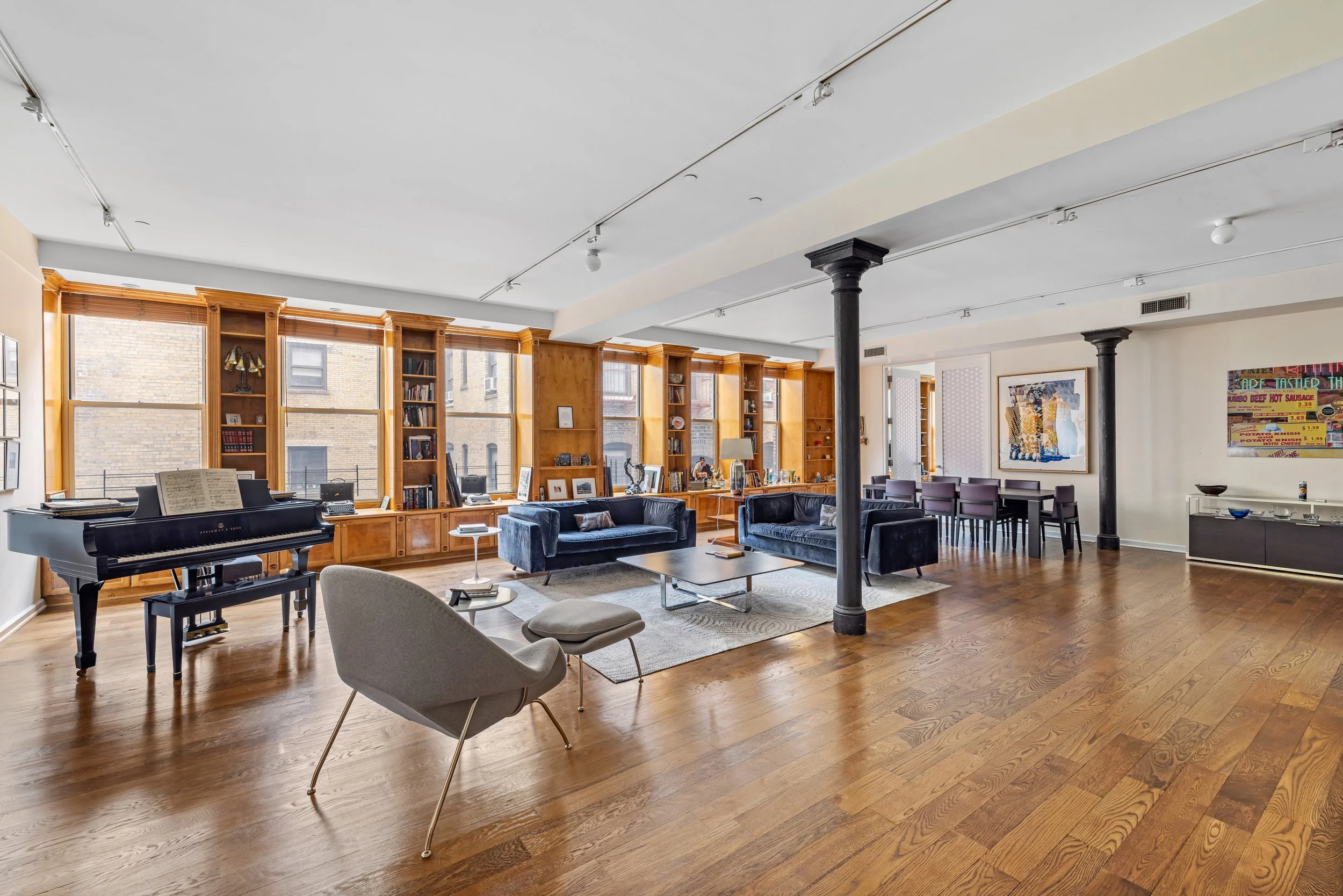
Before discussing technique, it’s important to understand what actually categorizes a space as a loft. From a photography perspective, loft interiors are defined by a specific set of architectural elements:
Open floor plan layouts with very few interior walls
Structural features like exposed columns or structural beams
Taller wall height or vaulted ceilings
Intentional exposure of industrial materials like concrete, brick, and steel
Built-in shelving or wood panels that span entire walls
Unlike traditional apartments, lofts aren’t designed to be compartmentalized. Their value comes from volume, structure, and character. These elements require intentional staging and photographing skills to shoot properly. This is where loft interior photography diverges from standard NYC real estate photography.
What Makes Photographing Loft Apartments Different?
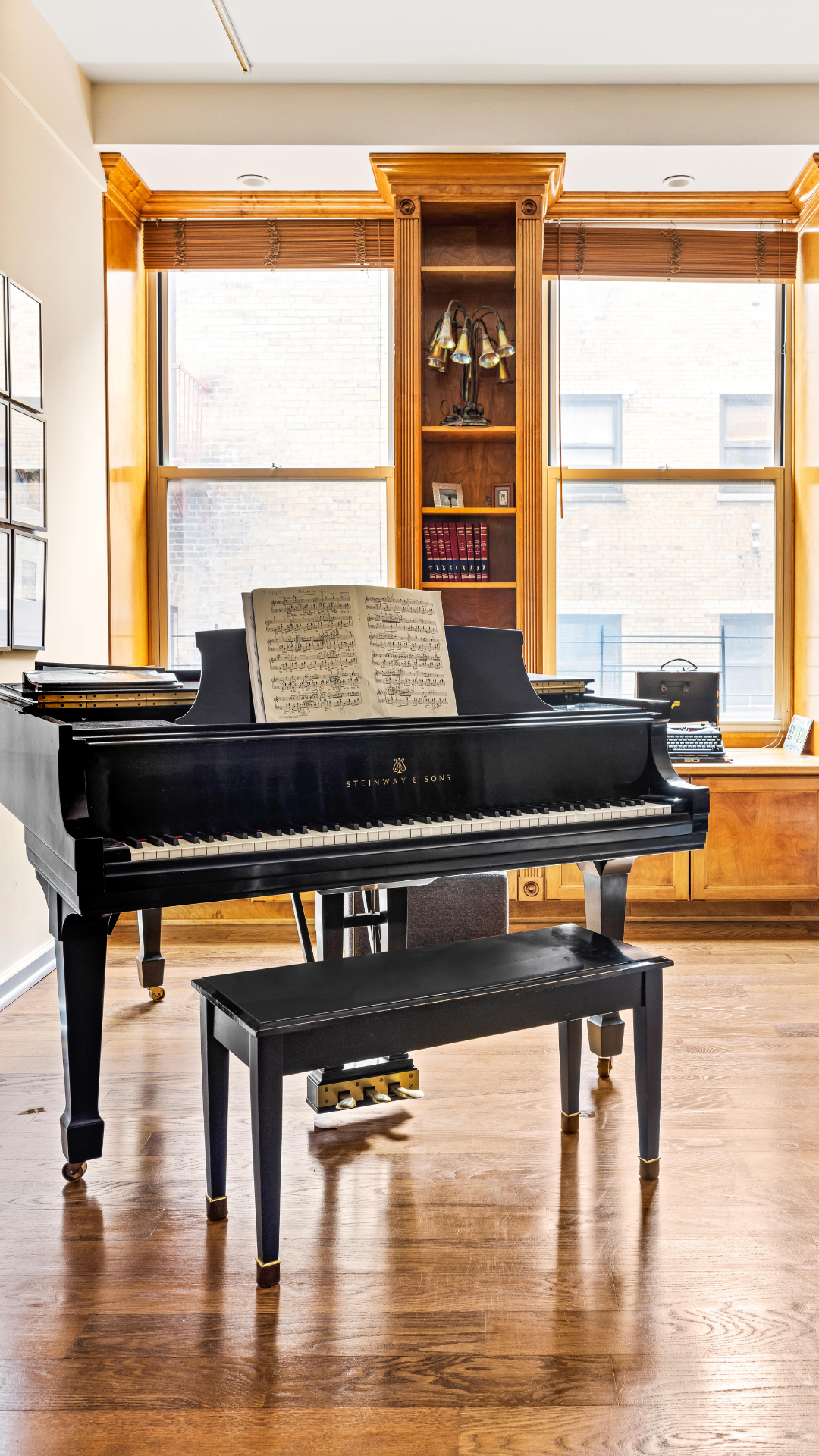
Loft listing photography fails most often when it’s approached like a conventional apartment shoot. In a standard apartment, the goal is usually straightforward: make each room feel bright andspacious, separately. In lofts, however, that approach can backfire. The difference becomes clear, when we look at spaces like the 114 W 17th St listing.
Common Loft Photography Mistakes
These are the issues that show up repeatedly in loft listings:
Relying too heavily on ultra-wide angles that distort the scale of the room
Treating open layouts as one large room instead of defining zones
Allowing structural columns to dominate the frame without purpose
Ignoring how industrial finishes reflect light
Completely removing the character of industrial elements
The people who rent/ buy loft apartments want to see a balance between openness and structuredness. Without this, the space can feel either chaotic or empty. either of those display the listing’s true value. This is why photographing loft apartments requires a different visual strategy.
How to Photograph Open-Concept Apartments
One of the most common questions we get asked is “How do you photograph an open-concept apartment so it doesn’t feel empty?” The answer lies in framing and staging.
Create Visual Zones Through Framing
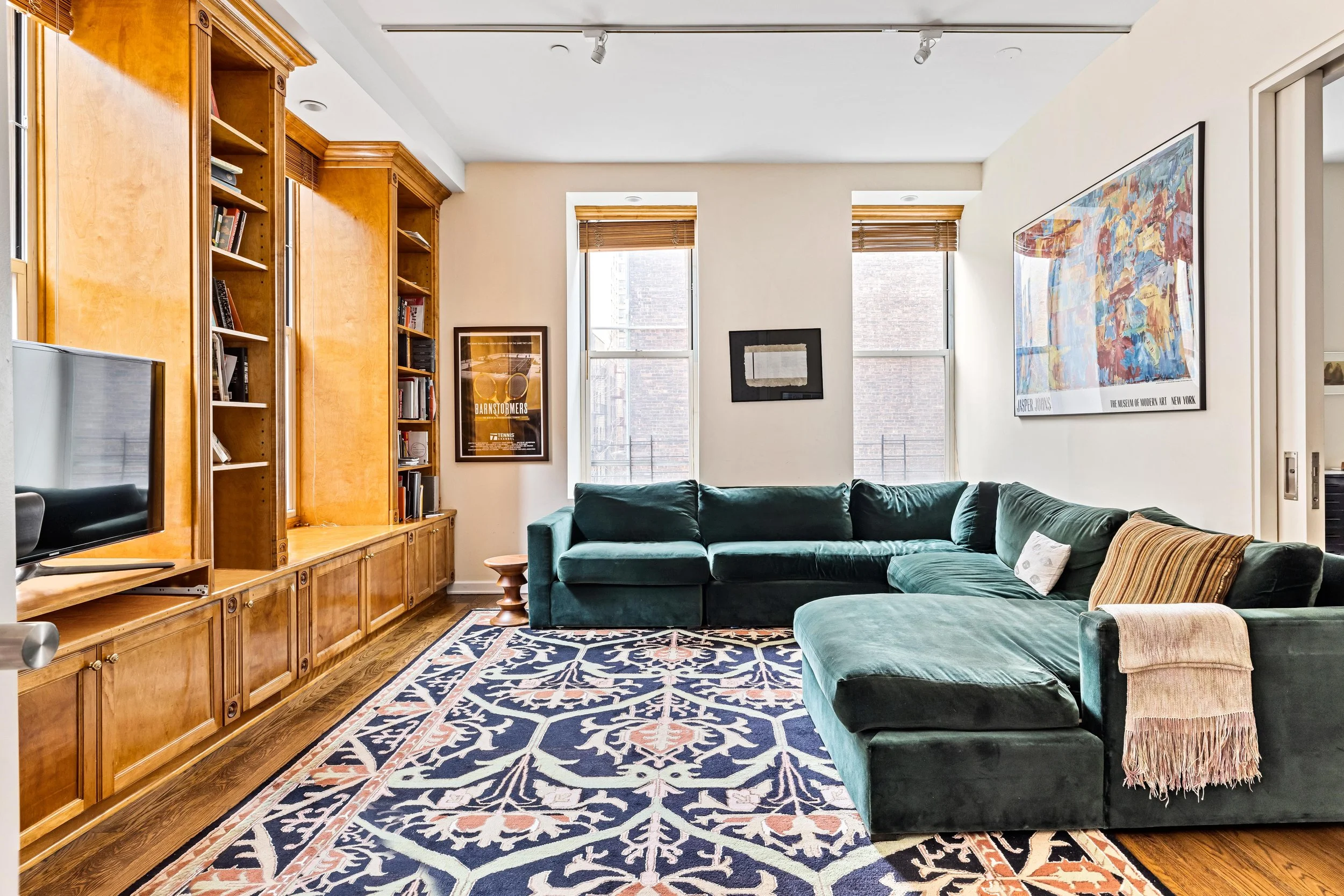
Even without walls, open-concept apartments still have distinct functional zones. Real estate photography should reinforce those zones.
Frame living, dining, and kitchen areas with intention
Use furniture placement as a visual anchor in each space
Avoid shots that show everything at once with no hierarchy
Control Sightlines and Depth
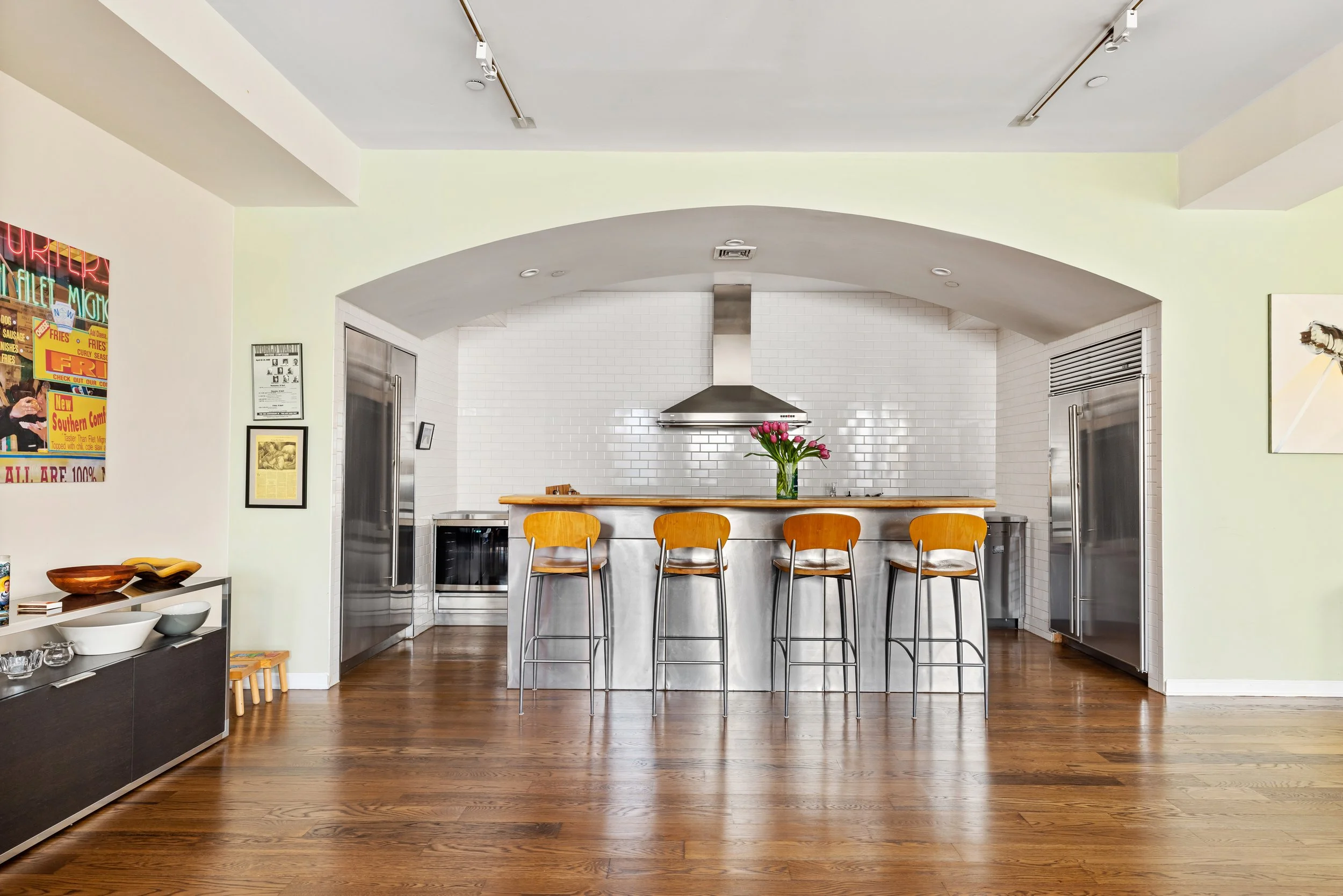
Open floor plans benefit from controlled depth.
Add foreground elements that guide buyers’ eyes to focal points
Use mid-ground anchors (sofas, tables, islands) to establish scale
Let background elements support the frame, not compete with it
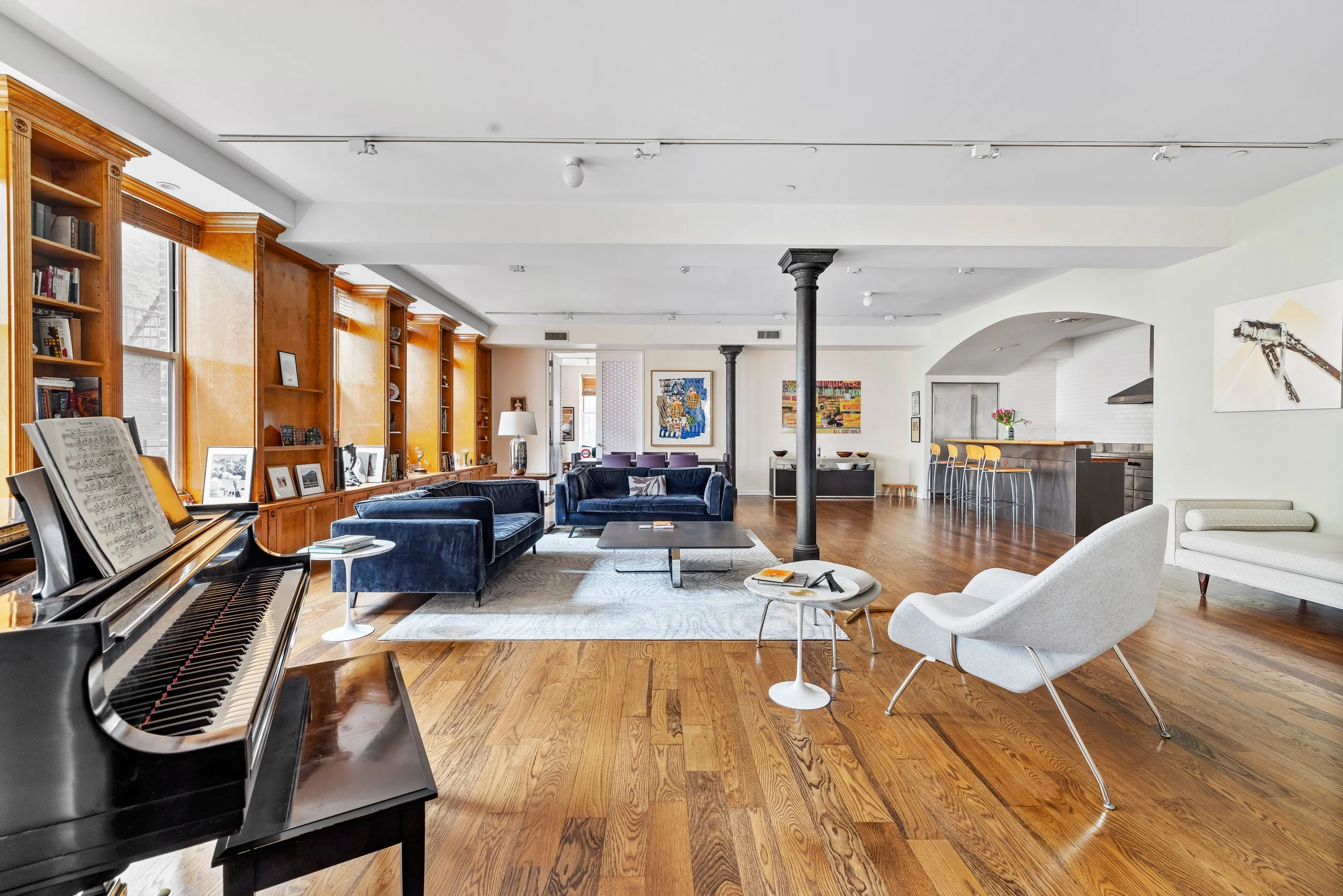
Be Selective With Wide Shots
Wide angles are useful in showing openness, but too many can make the listing feel empty.
Take 1-2 wide shots to establish scale
Medium shots highlight key room features
Detail shots reinforce character
The strongest loft photography combines all three of these concepts. You can see how these principles come together in the GHNYC portfolio, where open layouts are photographed with intention compared to traditional apartment listings.
Leveraging Structural Elements Elegantly
Structural elements are often viewed as obstacles, but in loft interiors, they’re usually the reason buyers are interested in the space in the first place. The key is photographing them purposefully.
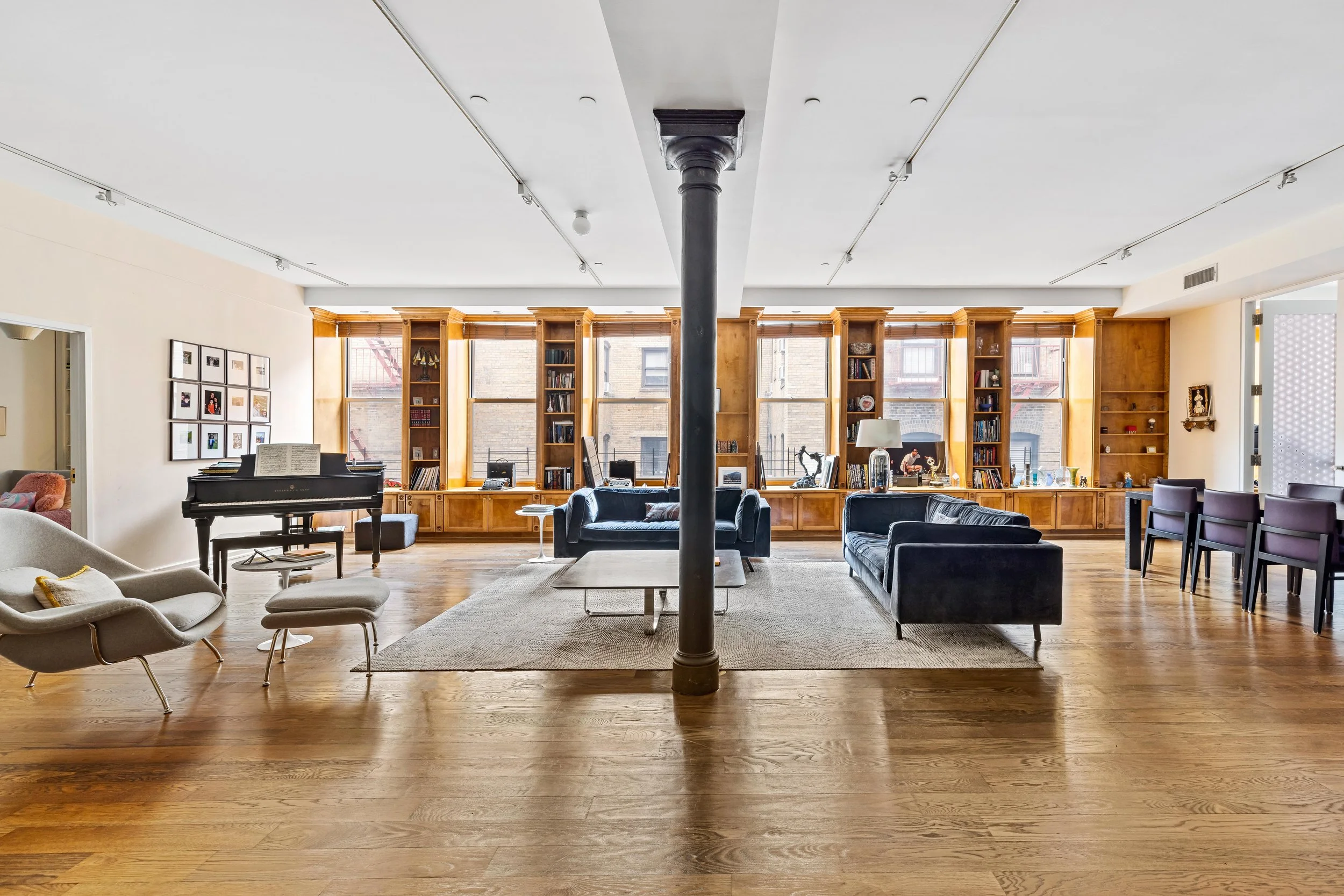
Turning Structure Into a Feature
Columns work best when they’re aligned with the frame, not cropped or angled awkwardly
Symmetry helps structural elements feel intentional rather than intrusive
Repeating materials strategically to create rhythm, not clutter
In industrial loft photography, exposed elements should be integrated into the space. When photographed correctly, these features communicate authenticity and architectural value rather than obstructions.
Our Approach to Photographing NYC Loft Interiors
At GreeneHouse NYC, loft photography starts with respect for architecture. We approach open spaces by focusing on:
Scale
Featured Structures
Flow
Highlighting Details
The goal is not to force lofts into a standard real estate template. We want to translate architectural intent into imagery that’s clear, balanced, and market-ready. This is how we capture the beauty of NYC loft interiors.
Why You Need Professionals Who Can Capture Loft Listings Well
Loft listings attract a more design-aware buyer. That audience notices details, and they expect to see character. Professional real estate photographers know how to:
Frame open layouts to highlight intentional structures
Work with industrial materials that may affect the scale, lighting, & mood
Highlighting architectural value instead of masking it
Creating images that feel editorial
When loft interiors are photographed well, buyers visualize themselves living in the space. This turns window-shoppers into people ready-to-sign.
Bring Loft Architecture to Life
Loft apartments deserve more than standard listing photos. Their scale, structure, and character require an experienced eye.
We understand how to photograph open layouts and industrial elements to boost buyer interest. If you’re marketing a loft-style property in New York, GHNYC’s professional interior photography can improve your listing’s performance. Explore GHNYC’s Interior Photography services to see how we approach loft interiors with precision, balance, and respect for architectural design.